Four (surprising) places ticks hang out 04/30/2012
Posted by thetickthatbitme in Media, TBI Facts.Tags: Borrelia, Grizzly Peak, health, Lyme, mice, Permethrin, prevention, tick, Tilden Regional Park, yard
4 comments
Most people think you have to be hiking around in the woods to pick up a tick. In reality, ticks are a lot closer than you think. Here are four (possibly surprising) places where ticks hang out:
1. In your un-mown lawn. Ticks like to hide in vegetation to keep from drying out. Vegetation includes tall grasses, so don’t get lazy on the lawn upkeep!
2. In piles of fallen leaves. Yes, leaves are fun to jump in, and yes, the crunchy sound they make when you walk over them is lovely, but you (or your pet) could also be picking up ticks from leaf litter, so rake ’em up!
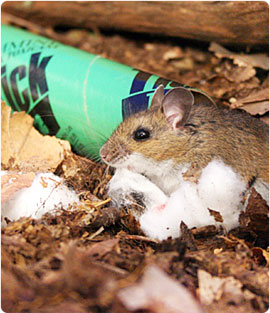
Ticks feed on and pick up diseases from mice. Image via tickencounter.org
3. Anywhere mice or other rodents live. This includes wood piles, rock walls, crawl spaces, ground covers, abandoned vehicles, garbage, bushes, and palm trees. Mice also like to eat fallen fruit, so if you have fruit trees, be sure to dispose of any fruit that falls. If you have mice or rats in your home, chances are you have ticks, too. Here’s a more detailed list of mouse hiding places and what you can do to keep them away from your yard and house.
4. On and underneath wooden picnic tables and benches. To me, this is the creepiest one, because I’ve been to countless kids’ birthdays and neighborhood get-togethers in the park, and the last thing on my mind was tick exposure. If you don’t believe me when I say the risk is real, here’s an article abstract for a study conducted by Kerry Padgett and Denise Bonilla from the California Department of Public Health.

Park bench on Grizzly Peak, in the Berkeley Hills. Image via Wikimedia Commons. Credit: nickton.
They collected ticks (some of which tested positive for Borrelia) from various areas in Berkeley’s Tilden Regional Park and found as many on wood surfaces as in leaf litter. If you’re planning on a day in the park, I recommend long pants and repellent with Permethrin.
If you’re spending time outdoors, it’s a good idea to check yourself for ticks as soon as you come inside. The University of Rhode Island’s Tick Encounter Resource Center has a great multimedia tool, the Tick Bite Locator, which suggests common places to check for ticks. They also have images of a variety of disease-carrying ticks (although the soft-bodied ones are missing) at different life stages.
Got a dog and not sure how to check him/her for ticks? WordPress blog After Gadget has a detailed explanation of how to do a thorough tick-check.
Be careful out there, everyone!
Related articles
This Season’s Ticking Bomb – WSJ.com 04/19/2012
Posted by thetickthatbitme in Media.Tags: Borrelia, CDC, hiking, infection, Lyme, pets, prevention, tick, tick-borne, Wall Street Journal
add a comment
Looking forward to spring? I’ve really been enjoying the extra daylight and walks with my dog, Lucy, after dinner, and it was so nice on Easter to be able to wear a dress without my legs getting cold!

Lucy is ready for a walk.
Nice weather, however, comes at a price. An article published last month in the Wall Street Journal explains how warming weather will contribute to an increase in tick population (and likely an increase in the number of tick-borne infections) this spring. You can (and should) read the full article here.
Here’s an interesting tidbit about a study the Centers for Disease Control are doing:
The CDC is conducting the first study of its kind to determine whether spraying the yard for ticks can not only kill pests, but also reduce human disease. Participating households agreed to be randomly assigned a single spray with a common pesticide, bifenthrin, or one that contained water, without knowing which they would receive.
Paul Mead, chief of epidemiology and surveillance activity at CDC’s bacterial-illness branch, says preliminary results from about 1,500 households indicate that a spray reduced the tick population by 60%.
“But there was far less of a reduction in tick encounters and illness,” indicating that even a sharp drop in tick populations leaves infected ones behind. “We may have to completely wipe out ticks to get an effect on human illness,” he says. The CDC is enrolling households for a second arm of the study and expects final results late in the fall. Organic repellents such as Alaska cedar are also being tested in other studies.

The article includes an interactive graphic with some suggestions for how to avoid tick bites in your backyard:
- Store firewood and bird feeders (birds carry ticks too!) away from the house.
- Keep leaves raked and grass mown.
- Restrict use of plants that may attract deer.
- Keep pets away from wood (and woods) and use tick repellant.
- Use decks, tile, and gravel close to the house.
- Seal up any holes in stone walls that mice might want to nest in. (And make sure your house is rodent-free!)
- Shower immediately after spending time outdoors in possibly tick-infested areas.
- Wash and dry clothing worn for hiking or golfing at high temperatures.
I’ve been trying a natural, non-toxic flea and tick repellant on Lucy (and myself) that’s made from cedar oil. What will you be doing this spring to avoid ticks (and thereby tick bites)?
 THE TICK THAT BIT ME