Choline Breakfast in Mom’s Kitchen 07/29/2012
Posted by thetickthatbitme in Choline Diet, Whole Person.Tags: Borrelia, Central Coast, choline, eggs, Food, health, Lyme, Sourdough, tomatoes
2 comments
I’m excited to be visiting my parents this week, especially because their kitchen is always filled with fresh fruits and vegetables. I missed the Central Coast’s superior tomatoes!
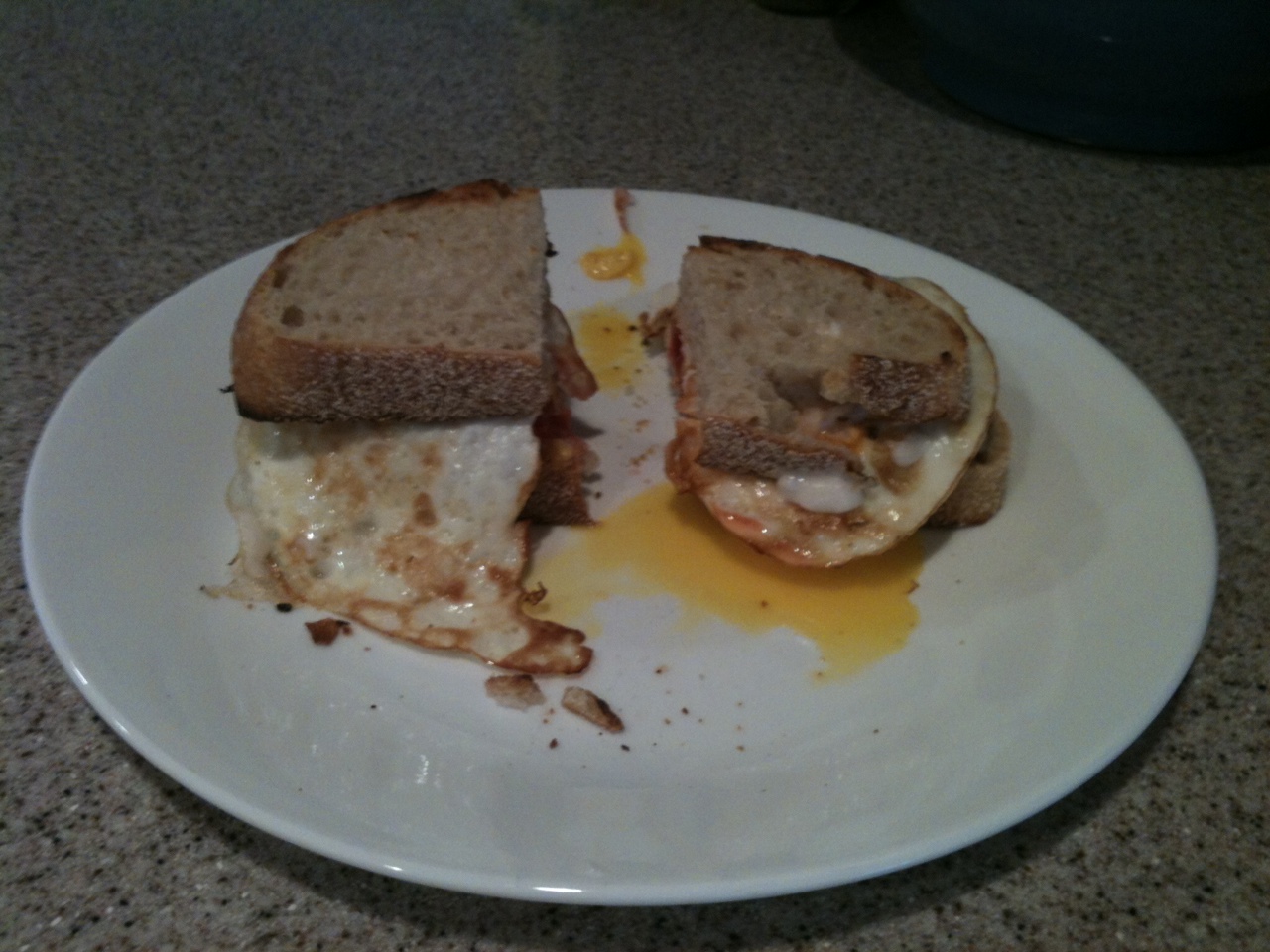
Tomato and egg sandwich on toasted sourdough.
Choline count: 2 eggs (250 mg) + 1 tomato (12 mg) + sourdough bread (15 mg) = 277 mg of choline
Happy Sunday everybody!
Related articles
- This week’s choline diet highlights (thetickthatbitme.com)
- The Choline Diet: Herbivore Style (thetickthatbitme.com)
- You are What Your Mother Eats: Higher Choline Means Lower Cortisol For Baby (valerieberkowitz.wordpress.com)
What a difference a year makes! 07/14/2012
Posted by thetickthatbitme in Patient Stories, Treatment.Tags: Borrelia, Borrelia hermsii, brain fog, choline, energy, healing, health, IV antibiotics, Lyme Disease, medicine, pain, Relapsing Fever, ticks, treatment
2 comments
A year ago yesterday was when I started my treatment for Borrelia hermsii. I left my home, my boyfriend, and my dog to stay with my parents so I could get treated with 42 days of IV antibiotics. Looking back on this time last year, so much has changed:
1. My knowledge level. I’m embarrassed to say that when I started treatment, I couldn’t even tell you if a tick has eight legs or six. (I never saw the ticks that bit me.) I knew nothing about the habitat or biology of ticks, and I didn’t know how many different diseases they can spread. I didn’t know how to spell Borrelia. Pretty much all I knew was that I was infected with a bacterium that was like Lyme but not Lyme that causes Relapsing Fever. This was strange to me because I never remembered having a fever–cold sweats, yes, but no measurable fever. I’d had IVs in my hand before when I’d been hospitalized, but I didn’t really understand what an infusion was, or that it mattered which vein a needle goes in. I had no idea what PubMed is. I’d read maybe three medical journal articles in my lifetime. Over those six weeks, I learned a lot from my doctor and other patients, and I kept learning through support group meetings and emails. Finally, I got up the energy and courage to launch this blog, and well…you know the rest.
2. My energy level. The fall of 2011 was when I should have realized something was wrong. I was student teaching in the mornings and teaching my regular classes at night. I remember what a struggle it was to get out of bed in the morning. Getting dressed was like running a marathon. I’d had back surgery the previous June, and I was in this hard brace that everyone called my turtle shell. But it wasn’t just my back that was a problem. Even with eight to ten hours sleep, by noon, I was struggling to stay awake. My 30 minute drive home on the freeway was terrifying. The only thing that kept my eyes open most days was if I was constantly chewing something, so I tried to always have snacks with me. When I got home, I’d take a 90 minute nap–which was never enough–and then I’d get up and go to work again. When the semester ended, I thought I would catch up on rest, but even only working part-time, I was constantly fatigued. I spent any time that I wasn’t working in bed. When I had to go on a business trip in March, I freaked out. How would I handle being on someone else’s schedule? How would I go six or seven hours without lying down? By June, I was freed from back braces, and my spine had healed, but I still felt awful. And I felt guilty. How had I become this lazy, unmotivated person who spends all her time in bed? A year later, I have my life back. I work two jobs, plus freelance work. I cook dinner for Boyfriend and me several nights a week, do all the grocery shopping, and keep the house clean. I walk my dog and ride my bike. I go shopping and to the movies with friends, drive long distances, and even occasionally babysit. Before, I only had the energy to do one or two of these things per day. I was a spoonie with a very low spoon limit. If I cleaned the house, that was it for the day. If I went to the store, I probably wouldn’t have the energy to cook the food I’d bought. If I taught a 3 hour class, I would come home and sleep the rest of the day. All of this I tried to conceal from my family and friends. I tried to be fine because there was no explanation for why I wasn’t.

Spoon chasing. (Image via unfocusedcreativity.blogspot.com)
Looking at how much better I am now makes me realize how sick I was. Yesterday, I had a two-hour morning conference call, after which I worked on the computer for another hour. Then I ate lunch and went to the grocery store. When I got back, I cleaned out the fridge, put the groceries away, and then did a thorough de-clutter and clean of the entire house. I read a chapter in my book, took a shower, and went out to dinner with Boyfriend. All that activity would never have fit into one day when I was sick. I was up again this morning at 8:00, feeling rested.
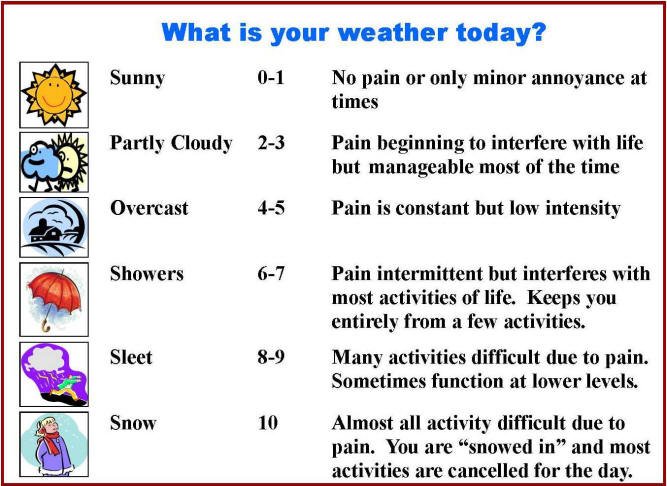
Weather-style pain scale. (Image via fibroofoz.blogspot.com)
3. My pain level. I was on strong prescription painkillers for a year and a half, starting in June 2010 after my surgery. Clearly, I didn’t get off them when I was supposed to, 6-9 months post-surgery. That’s because I didn’t just have back pain. It was in my hips, neck, and shoulders, too. The pain didn’t completely go away right after treatment. It’s been a slow progression. In the fall, I was able to wean myself off painkillers and just use heating pads when my back or joints bothered me. We know from the research that reactive arthritis may simply be part of the package for some patients with treated Borrelia infections. This is my framework for understanding some of my continuing aches and pains. For me, low-impact exercise, comfortable shoes, heating pads, and a memory foam mattress pad help a great deal. Whereas before my daily pain level rarely dropped below a four, even with drugs, now I’m at a one or a two most days, and I’m drug-free, aside from very rarely taking Advil.

What brain fog does to reading a book. (Image via a-b-martin.blogspot.com)
4. My cognitive level. The ability to think, speak, and write clearly is essential to my livelihood. Having a Borrelia infection plunged me into what many people describe as a “brain fog.” For more than a year, I was sort of drifting through life, not able to think very clearly about anything. It came on gradually, and after my surgery, it got worse, which I attributed to the pain and the painkillers. Now I’ve met enough fellow patients that I see the pattern. I understand how this infection clouded my cognition. One of the reasons I didn’t start writing this blog while I was getting treated was that I couldn’t focus well enough. Even post-treatment, it took me a few months to start feeling sharp again. I really noticed the change this past semester when teaching got easier. I was able to learn the names of all my students within the first three weeks–which hadn’t happened the previous four semesters. My focus and mental endurance were so much better, as was my time management during class. I felt sort of like I’d woken up from a long sleep. The time in my life when I was very sick seems blurry. Now, not only do I have the energy to do more, but I have much better concentration. I can even go back and look at things I wrote two years ago and see the difference in sentence structure. All I can say is it’s good to be “back.”
What I’m doing to stay well, one year out:
(Image via Wikipedia. Credit: Ren West)
1. Eating my eggs. You wouldn’t believe how “off” I feel if I go a day without an egg. That’s probably because my neurologically-damaged body likes choline, and eggs are full of it. I also find myself craving green vegetables. In fact, whenever friends ask me where I want to eat, I usually say, “Anywhere with good veggies.” I know there are many diets out there that are designed to help people with Borrelia infections avoid inflammation and other problems, and many of those recommend avoiding meat, dairy, gluten, and sugar. Personally, I’m not really cut out for that. I’m not the kind of person who can say, “I’m not going to eat X” when X is something that I really like, like sourdough bread, or milk, or chocolate. That’s not to knock the vegetarian, dairy-free, gluten-free, and/or sugar-free diets. I recognize that they do work for some people. However, I’m pretty sure that my body needs both meat and sugar to function normally, so I’ve always been opposed to giving up those. Other than being lactose-intolerant, I have no problems with dairy, and I don’t have more pain when I drink my Lactaid milk than on days when I don’t, so I’m not so concerned with the inflammation factor there. I seem to tolerate gluten pretty well, but I do try to limit my grains, as they’re not the best source of choline. No one gets between me and my egg sandwiches, though.
2. Staying active. I spent a large percentage of a year in bed, and going back there is very tempting at times, especially since during that time I developed a large collection of movies and TV shows, and my bed is VERY comfortable. Because I used to do most things from bed, I’m just now getting used to LIVING in my living room, WORKING in the office, and SLEEPING in my bedroom. (In fact, I’m breaking this rule now, typing the first draft of this from bed, but it’s a Saturday, and I’ve been working all week, so I don’t feel bad.) For me, staying active means not only “working out” (by walking the dog, riding my bike, and playing Dance Central on Xbox) but “getting stuff done.” I used to put off doing things and tell myself, “I’ll do it when I’m not so tired, or when I’m in less pain.” Now I don’t have those excuses, and it’s much less burdensome to get things done right away. Procrastination used to be a form of self-preservation. Now it’s a habit I have to work to break.
3. Preventing re-infection. After what I’ve been through, the last thing I want is another tick-borne infection, so I make sure that both my dog and I stay out of high risk areas for ticks. When we walk, we stay on the sidewalk. Boyfriend and I keep the yard clean–which is not too difficult since our backyard is mostly concrete. We treat Lucy monthly for fleas and ticks, and I’m always spraying that Cedarcide. I’ve decided not to do any hiking or camping for a while. When I want to enjoy the outdoors, I ride my bike or go to the beach.
4. Staying current on my tests. I get my blood drawn every 3 months so my doctor can check my antibody titer. My doctor said if I have a four-fold rise, then we’ll need to consider re-treatment. So far, I’ve been okay, but I want to be vigilant. I don’t want to get re-infected and not know about it.
Hope everyone is having a wonderful weekend!
Related articles
The Choline Diet: Herbivore Style 07/01/2012
Posted by thetickthatbitme in Choline Diet, Tick-Lit, Whole Person.Tags: allergy, Anaplasmosis, Borrelia, Borrelia hermsii, choline, diet, health, Lyme Disease, meat, steak, vegetarian
add a comment
In the past, my choline diet posts have been mostly geared towards omnivores, as eating eggs and meat is an easy way to get one’s daily dose of choline. If you’re new to this blog–or just forgetful–I’ve been on a choline-rich diet since I started getting treated for Borrelia hermsii and Anaplasmosis last year. My doctor recommended this because I had some neurological involvement with my illness–brain fog, chronic fatigue, arthralgias–and there’s research that suggests that eating choline helps our bodies produce more of the neurotransmitter acetylcholine. Choline has also been linked to lower levels of inflammation. In addition, choline is particularly important for pregnant women, as higher choline intake during pregnancy is associated with a lower risk of neural tube defects in infants.
Image via doubleeaglefitness.wordpress.com
So that’s why I’m always telling my readers to eat their eggs and meat and green veggies. However, since a study led by Scott Commins at the University of Virginia linking lone star tick bites to red meat allergies gained national media attention (ABC, CNN) a few weeks ago, I’ve been thinking about how to make my choline recipe recommendations more herbivore-friendly.
After my last choline-related post, I stumbled upon the USDA Database for the Choline Content of Common Foods, which is a fairly good resource (and handy since it comes in a searchable PDF), although it doesn’t include everything I like to eat. (For example, the desserts section is severely lacking.) The other issue with it is that the choline values are reported in mg per 100 grams of food, and the average person may not eat 100 grams of some of those food items in one sitting–particularly the spices. (100 grams of chili powder, anyone?) So keep in mind that the choline numbers below are based on that ratio, and don’t think you’re getting 120 mg of choline in a pinch of mustard seed. This week, I decided to go through the database and find the foods with the most choline. For my herbivore/vegetarian readers out there, whatever your reason for avoiding meat (moral, dietary, tick-bite-induced allergy…), here are the top choline sources from several non-meat categories:
Top 10 Veggies:
- edamame—56 mg*
- broccoli (boiled) —40 mg
- cauliflower (boiled) —39 mg
- tomato paste—39 mg
- artichokes (boiled)—34 mg
- peas (boiled)—28 mg
- spinach (cooked) —28 mg
- asparagus (boiled) —28 mg
- sweet corn (boiled) —22 mg
- red potatoes (baked) —19 mg
Top 10 Fruits:
- dried figs—16 mg
- clementines—14 mg
- avocados—14 mg
- dried apricots—14 mg
- raspberries—12 mg
- raisins—11 mg
- prunes—10 mg
- mandarin oranges—10 mg
- medjool dates—9.9 mg
- bananas—9.8 mg
Top 10 Nuts and Seeds:
- flaxseed—79 mg
- dry roasted pistachios—71 mg
- roasted pumpkin seed kernels—63 mg
- roasted cashews—61 mg
- dried pine nuts—56 mg
- sunflower seed kernels—55 mg
- almonds—52 mg
- hazelnuts—46 mg
- dry roasted macadamia nuts—45 mg
- pecans—41 mg
Top 5 Legumes:
- creamy peanutbutter—66 mg
- boiled navy beans—45 mg
- baked beans—28 mg
- firm tofu—28 mg
- soft tofu—27 mg
Top 10 Spices:
- mustard seed—120 mg
- dried parsley—97 mg
- garlic powder—68 mg
- chili powder—67 mg
- curry powder—64 mg
- dried basil—55 mg
- paprika—52 mg
- ground turmeric—49 mg
- ground ginger—41 mg
- onion powder—39 mg
*All measurements are given in mg/100 g of food
I hope these lists get you on your way to a diet more rich in choline, whether it includes meat or not.
This concludes the herbivore section of this post. If you don’t want to be tempted with any meat, try clicking over to some of my other posts.
***
If you’re here in search of choline diet inspiration of the omnivore variety, I haven’t completely forgotten you. Here’s a glimpse of what I had for lunch.

Steak sandwich on pumpernickel with avocado and tomato.
Happy Sunday, everybody! And watch out for ticks!
Related articles
- Eat Your Eggs, Benedict!
- Snacking in the name of choline
- Ehrlichia: confusing cousins, the blood supply, and the new kid on the block
- My Story
- Four (surprising) places ticks hang out
- Fresh Friday: 10 Reasons to Eat Egg Yolks (doubleeaglefitness.wordpress.com)
06/10/2012
Posted by thetickthatbitme in Choline Diet, Reblogs.Tags: Borrelia, choline, diet, Lyme, medicine, nutrition, pregnancy, tick-borne
add a comment
Great post about the importance of choline intake during pregnacy.
Related articles
- Eat Your Eggs, Benedict! (thetickthatbitme.com)
- Omelet you in on these yummy high-choline recipes (thetickthatbitme.com)
- Snacking in the name of choline (thetickthatbitme.com)
This week’s choline diet highlights 05/20/2012
Posted by thetickthatbitme in Uncategorized.Tags: breakfast, choline, Coleslaw, Cooking, diet, eggs, health, recipe, Rye bread
add a comment
I tried to be good and cook simple, choline-rich meals at home this week. Here are some highlights:
McBreakfast Sandwich
I love making my own version of a fast food breakfast sandwich for several reasons. One, it’s healthier because I can use better ingredients. Two, it’s relatively inexpensive. Three, I don’t have to drive anywhere to get it.

Start with an egg and a slice of Canadian bacon.
Sometimes I use an English muffin or a bagel, but this week I didn’t have those, so I used sourdough, which I actually like better. I also subbed out boring old American cheese for some spicy pepperjack.

Pepperjack on toasted sourdough. They’re big slices, so I just used one and folded it in half.
To drink, I had Treetop orange-pinapple juice, which I water down.

Choline count: fried egg (125 mg) + Canadian bacon (19 mg) + sourdough bread (15 mg) = 159 mg

Rainbow Coleslaw
I grew up on traditional southern-style coleslaw, and when the weather gets hot, I start craving it. I love putting it on pulled-pork BBQ sandwiches. Being that eating cabbage covered in mayonaise (or in my case, Miracle Whip) is not the healthiest way to get one’s veggies, when I make coleslaw at home, I try to make it a little healthier (and more rich in choline). One of the ways to do this is to use broccoli slaw. You can make it yourself in a food processor, or if you’re lazy like me, you can buy it already shredded up in a bag.
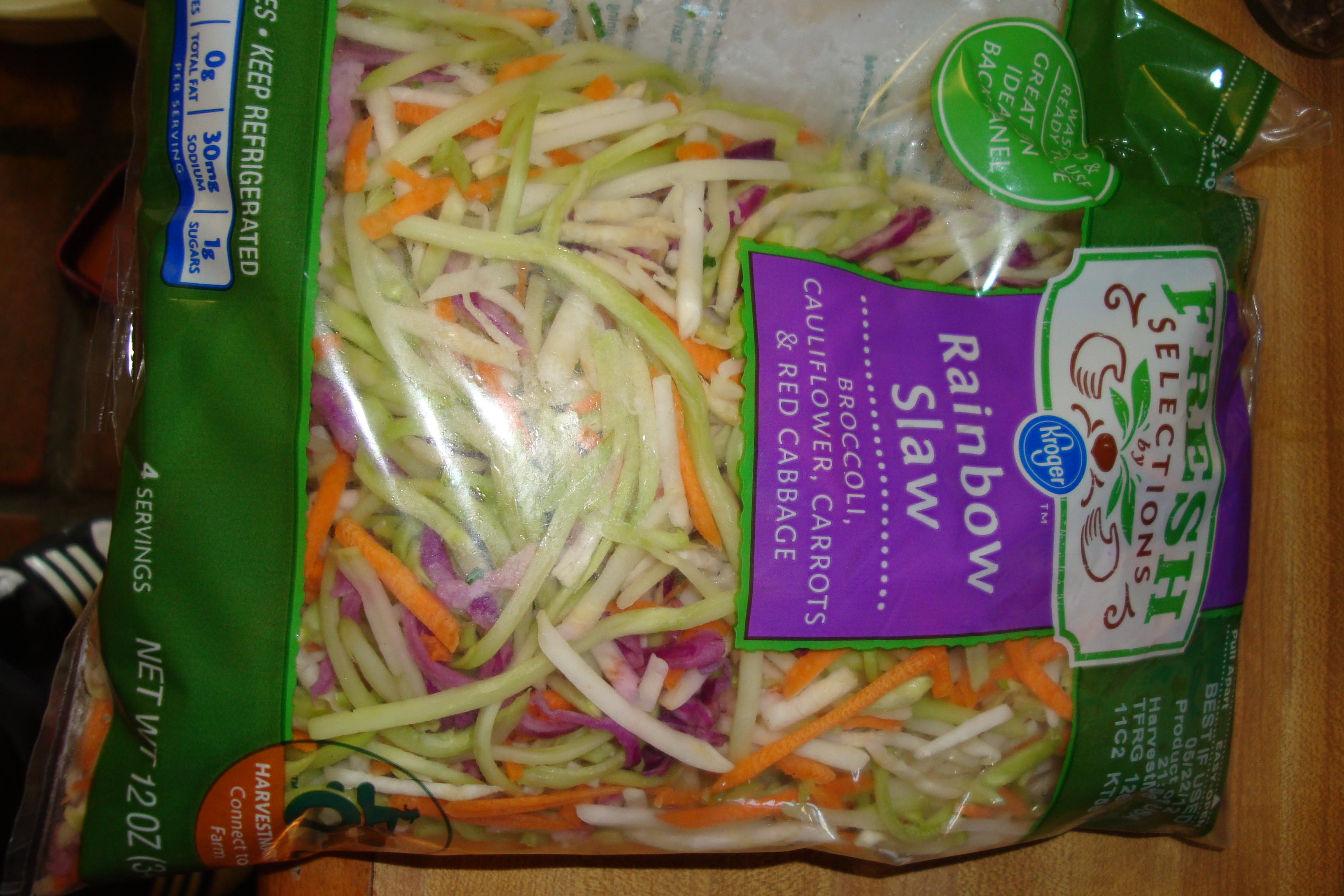
In a small bowl, I mix the dressing, which consists of Miracle Whip, sweet pickle juice (I didn’t have any, so I skimmed some out of the pickle relish jar), and horseradish sauce (for a kick). Some people also like to add vinegar (in place of pickle juice) and dijon mustard.
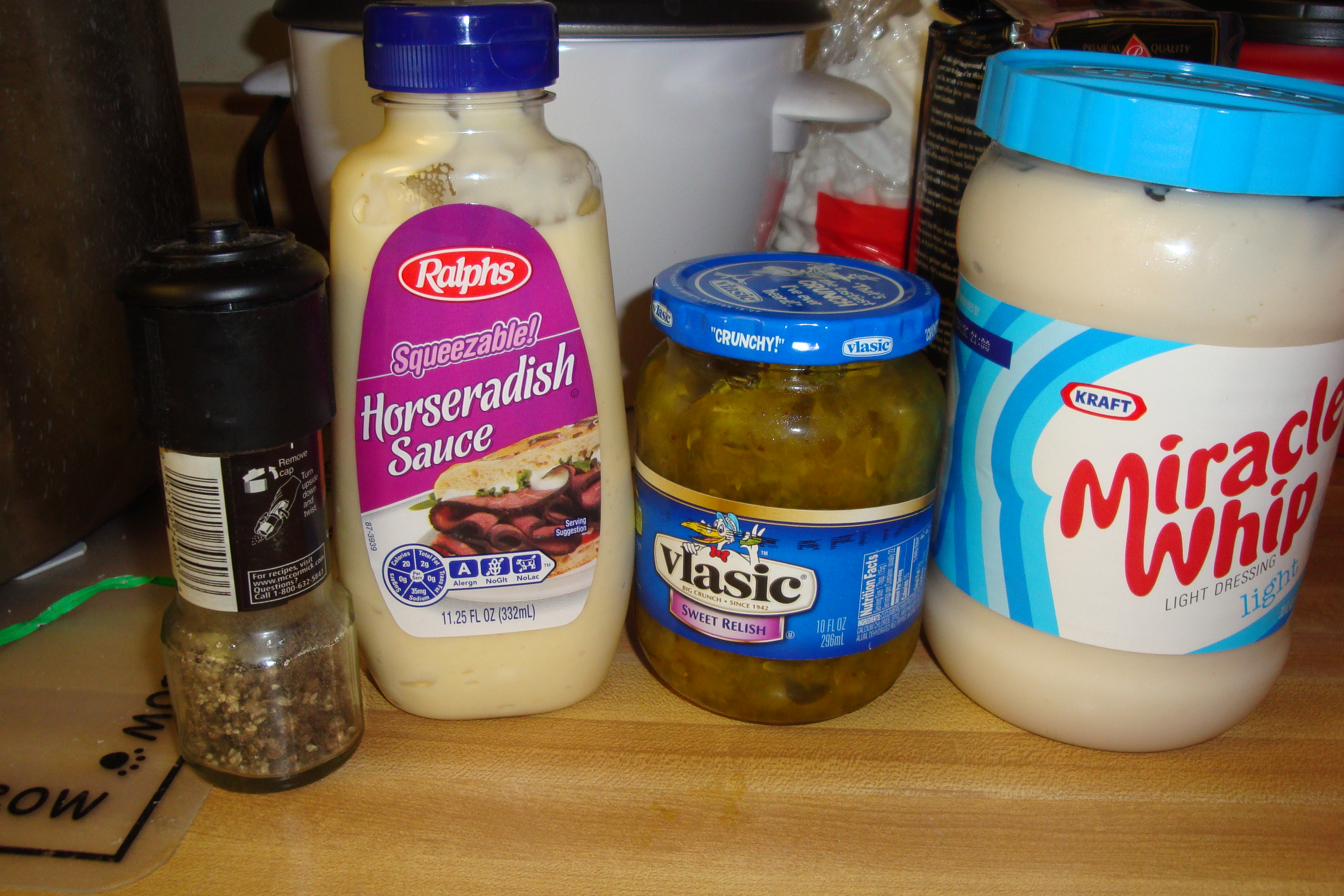
The condiment lineup.
Then I dump the shredded veggies into a big bowl, add a diced tomato, and mix in the dressing. It’s best to refrigerate slaw for a few hours before eating, but I always sneak a few spoonfulls to make sure it tastes right.
Choline count: broccoli, cauliflower, carrot, cabbage, tomato
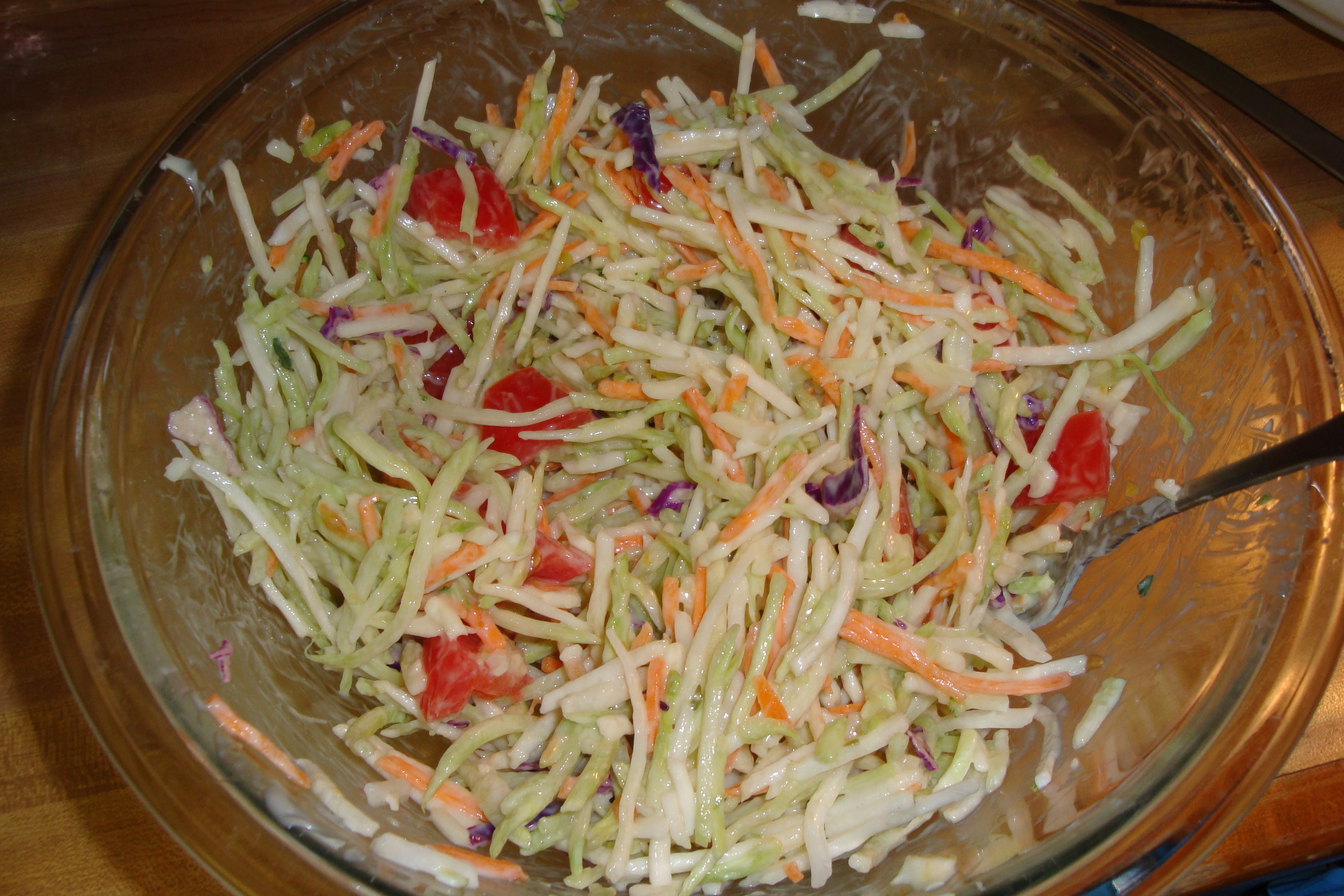
Ready to refrigerate.
California Sandwich
I’ve been eating a lot of sandwiches lately. Boyfriend brought back several loaves of bread from Eric Schat’s Bakery, including some delicious rye bread, so I used some of it to make this sandwich.
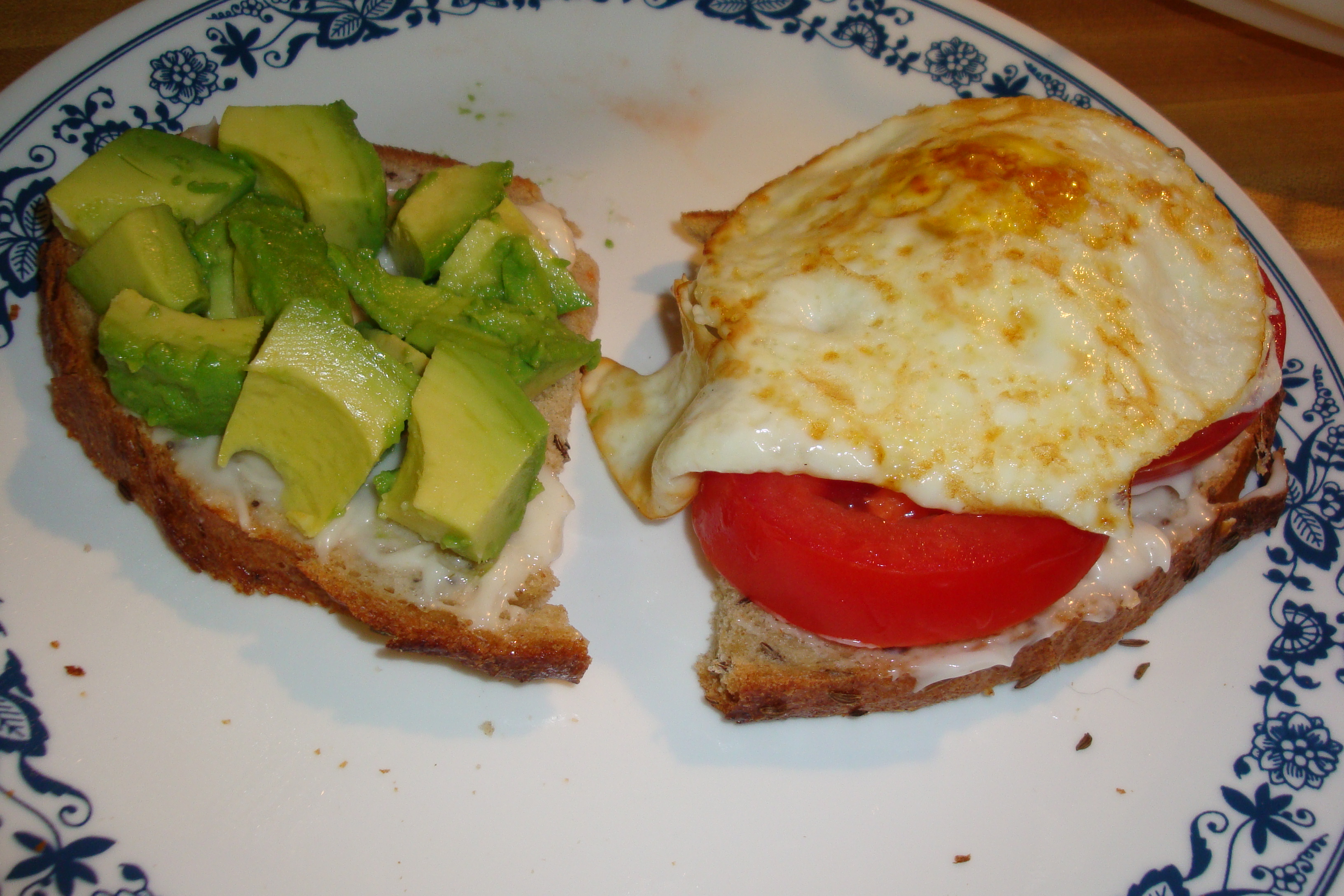
I topped that slice of delicious rye bread with Miracle Whip, horseradish sauce, tomato slices, a fried egg, and half an avocado.
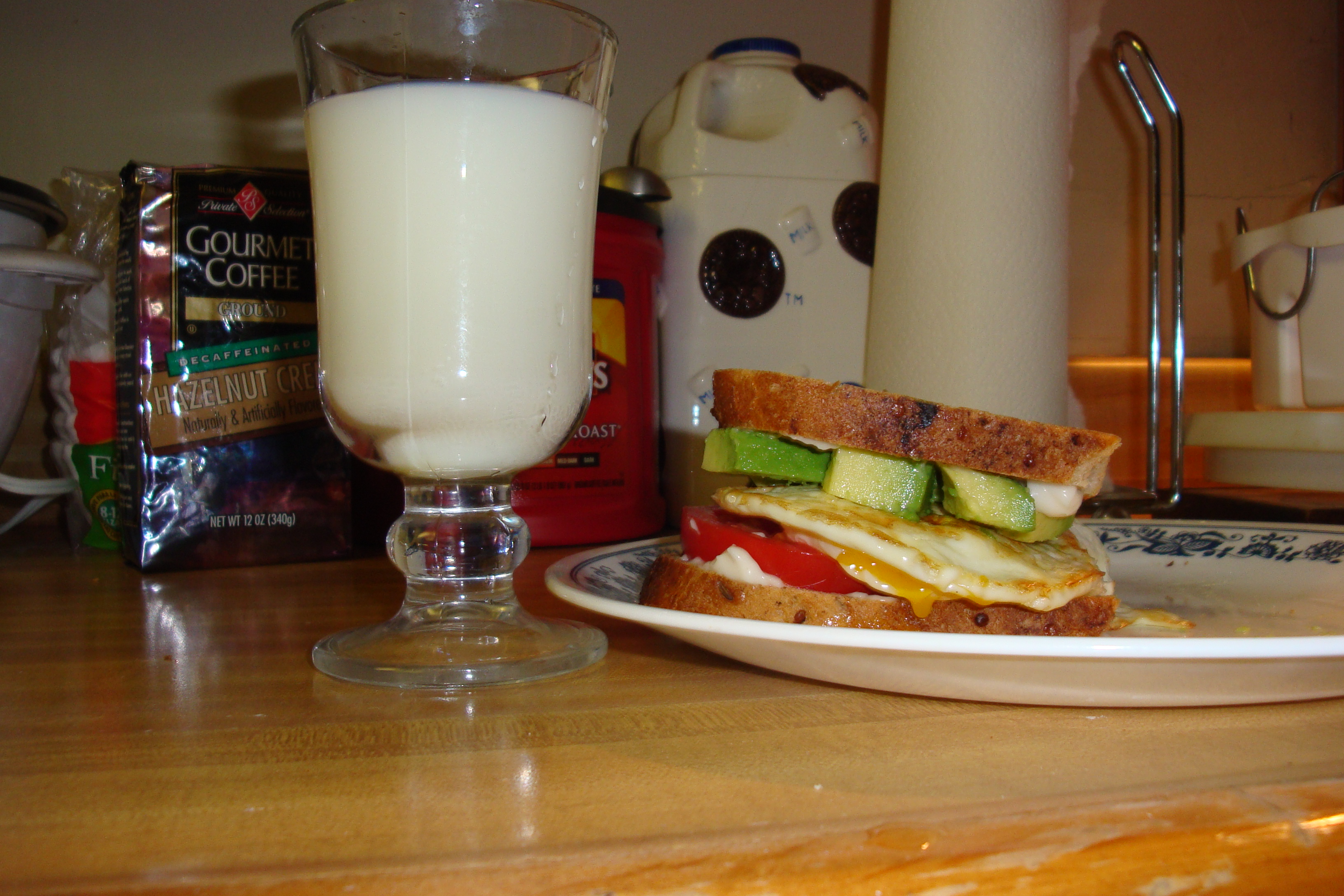
Choline count: fried egg (125 mg) + tomato (12 mg) + 1/2 avocado (9 mg) + rye bread (5 mg) + milk (39 mg) = 190 mg
Chorizo Scramble
Toward the end of the week, I started feeling guilty about eating so much bread, so I cooked up some Mexican chorizo with eggs and topped it with diced avocado and tomato. Cooking for two, I use five eggs and one package (a long link) of chorizo.

Choline count: 2 eggs (250 mg) + chorizo (58 mg) + tomato (12 mg) + 1/2 avocado (9 mg) = 329 mg
Related articles
Eating out {in the name of choline} 05/13/2012
Posted by thetickthatbitme in Choline Diet, Whole Person.Tags: chocolate soufflé, choline, diet, duck, filet mignon, health, hummus, restaurants, Yelp
1 comment so far
One of my dear friends is a new mommy who’s been going a little stir-crazy for the past two months waiting for her son to get his first shots and be allowed to leave the house more regularly. Yesterday, she got a few baby-free hours, which presented a perfect opportunity for some fine dining (or at least what we frugal ladies consider fine dining), and that’s how we found ourselves at a little place called Cafe Mundial in Monrovia.
Now, I must confess, I wasn’t thinking about my choline diet at all as I was scanning drooling over the menu, but it turned out that both my friend and I did fairly well on the choline count without really trying. Here’s what we had:
To Start
This restaurant serves their complimentary bread with a side of hummus (which is really not to be confused with humus). Much to my delight, when I looked up hummus today, I discovered it has 4 mg per tablespoon. (Side note: if you look up “humus,” which is how WordPress spellcheck thinks “hummus” should be spelled, you’ll find it has no choline. So if anyone ever commands you to “Eat dirt!” tell them, “I can’t. I’m on a choline diet.”) We also each ordered the soup du jour, which was tomato basil. (I have no picture of this, and couldn’t find one from Cafe Mundial.) Not much choline in the soup, but it was delicious!
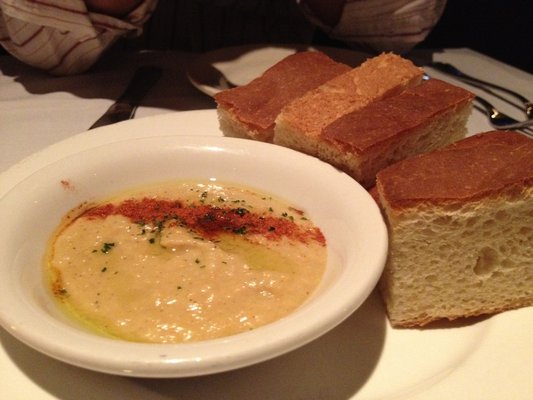
Yummy hummus with bread for dipping. (Image via Yelp)
The Main Course
I had the duck conflit, which was accompanied by a small scoop of mashed potatoes and generous helpings of carrots and zucchini. You can see it pictured below with beans instead. Choline count for roast duck: 43 mg for half a pound. Cooked carrots and zucchini add 7 mg and 8.5 mg choline, respectively, for half a cup each.

Duck Conflit with veggies. (Image via Yelp)
The Finale
Though I admire the philosophy of “Life is short; eat dessert first,” this isn’t really possible with soufflé, owing to the long prep time. It was more like, “Life is short; order dessert first, or else it won’t be ready.” This one was accompanied by fresh strawberry slices and a vanilla bean sauce. We were a few bites into it when I said, “Hold on, I should take a picture of this.” It was just as delicious as it looks. I couldn’t find any nutritional data for chocolate soufflé, but boring old grocery-store-bakery chocolate cake has about 20 mg per slice. With all the eggs and chocolate in soufflé, I’m guessing this little treat comes it at around 30 mg.

Chocolate soufflé, a.k.a. Heaven.
So how well did I fare in the choline department? According to my (rough) estimate, I had about 100 mg of choline. My friend, who ordered the filet mignon (77 mg choline in 3 oz), out-cholined me by about 40 mg.
Related articles
- Snacking in the name of choline
- Omelet you in on these yummy high-choline recipes
- CHOCOLATE SOUFFLÉ FOR VALENTINE’S DAY! (dearmartini.wordpress.com)
Snacking in the name of choline 05/06/2012
Posted by thetickthatbitme in Choline Diet, Humor.Tags: Banana, carrot, choline, eclaire, health, humor, Peanut butter, recipe, Snack food, Sweet potato
2 comments
Since I spend a lot of time working from home, it’s difficult to resist a lot of snacking. Now I believe that eating small meals throughout the day is healthy; however, when you factor in my mighty sweet tooth and the fact that my better half keeps visiting the Entemann’s bakery outlet on his way home from work (he can’t resist the deals), well…you see the predicament. So I decided this week that if I’m going to be ‘bad’ and indulge in a few fattening or sugary or salty snacks, I had better make sure I was getting my choline. Here are some of the choline-rich snacks that my research turned up.
Savory Choline Snacks
Peanut Butter (21 mg in 2 tbsp) and Carrots (6 mg in 1 large carrot)
This is an established favorite for both me and my dad. I used to feel guilty about putting peanut butter on something that is otherwise pretty healthy, but with about 10 mg of choline per tablespoon, I don’t feel that bad. I do, by the way, buy the reduced fat peanut butter. If you prefer almond butter, it has about 8 mg of choline per tablespoon.
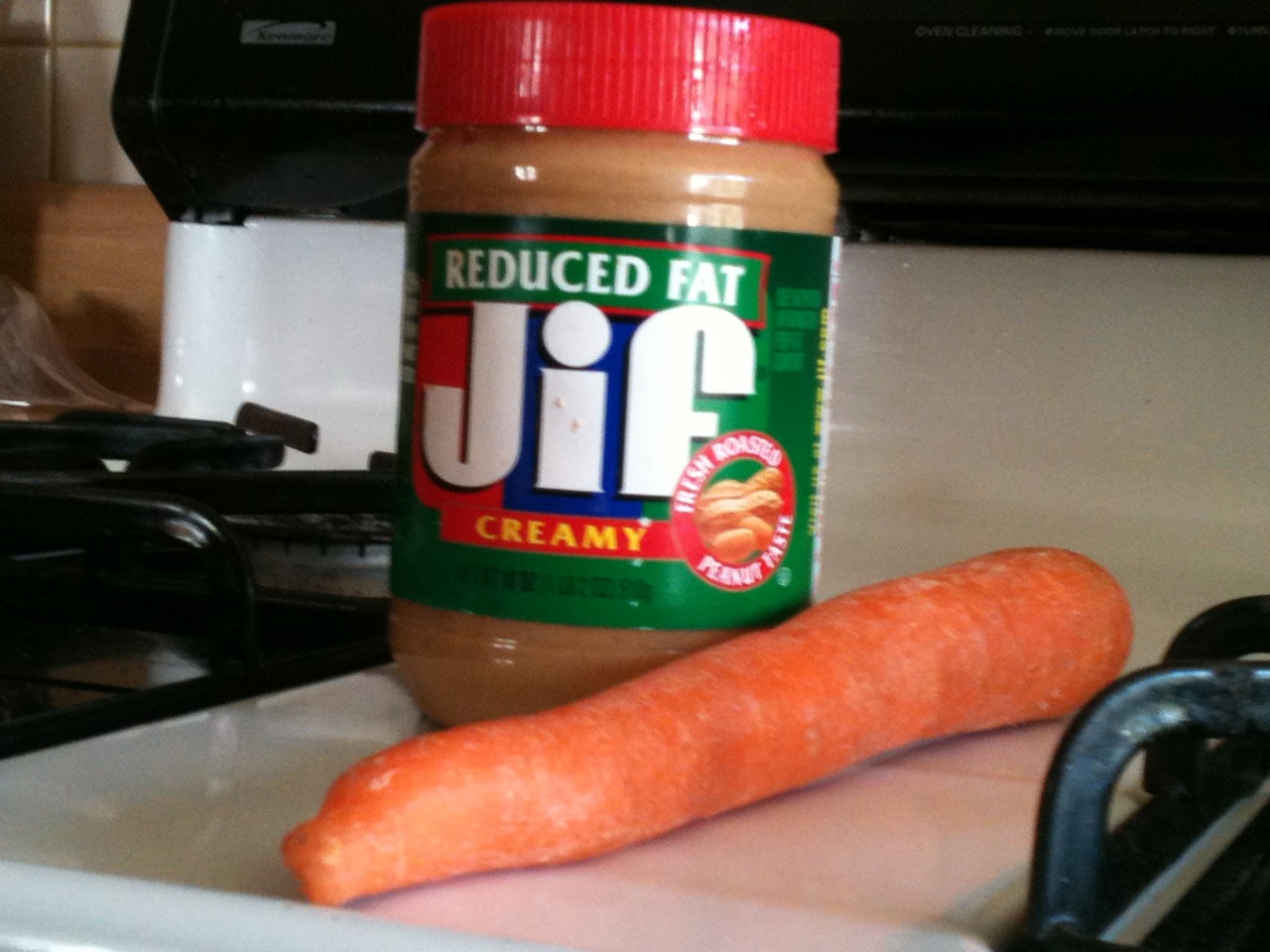
Carrot ♥ Jif in my kitchen.
Pistachios (20 mg in 1 oz)
I’m a girl who likes to play with her food, so these are one of my favorite snacks. Sometimes I like to eat them with a few chocolate chips and some dried cranberries. If you’re wondering how many dry roasted pistachios are in an ounce, it’s about 49.

(Image via Wikimedia Commons)
Edamame (56 mg in 100 g—about 2/3 cup)
I usually order edamame (boiled soybean pods) as an appetizer when I go out for sushi with friends. Some grocery stores also have it in the freezer section.
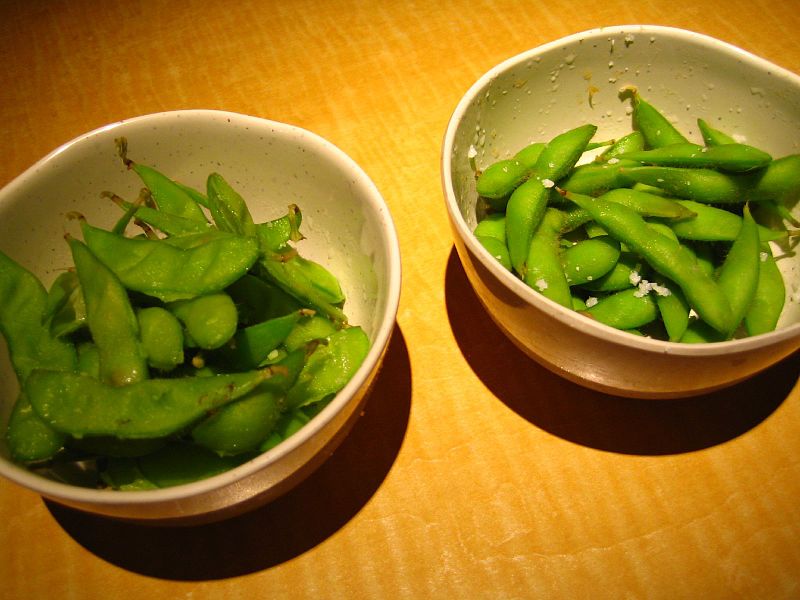
(Image via Wikimedia Commons. Credit: habitatgirl)
Sweet Choline Snacks
Peanut Butter (21 mg in 2 tbsp) and Banana (11 mg)
Yes, you can see I have a propensity to put peanut butter on a lot of things. This is a third-generation snack in my family that originated with my grandma. I find a glass of chocolate milk goes well with it. (One cup of chocolate milk also adds 42 mg of choline!)
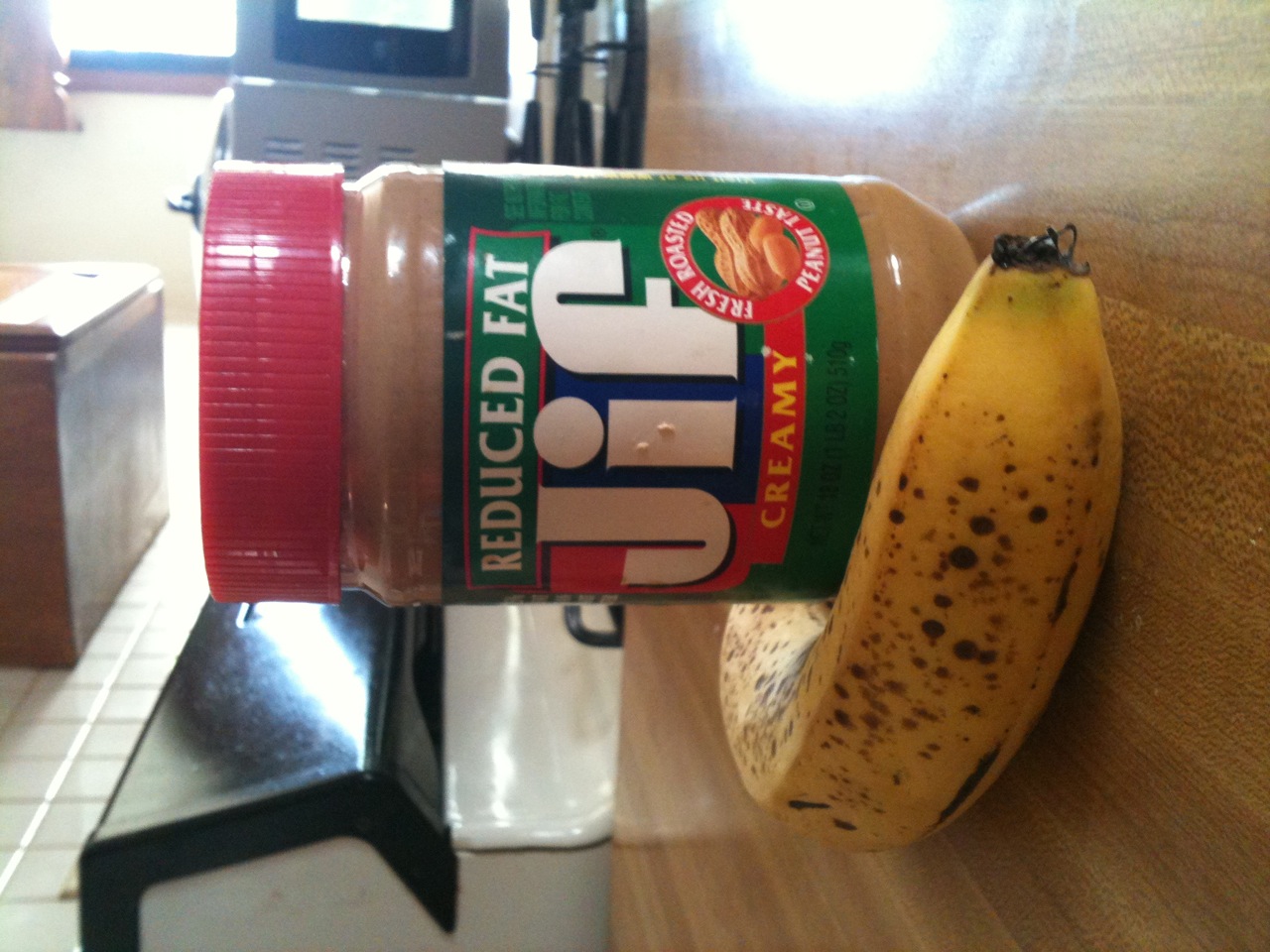
Banana and Jif hanging out on my counter. If Carrot finds out, you are sooo busted, Jif!
Baked Sweet Potato (23 mg for a large one)
Sweet potatoes are so underrated. I try to substitute them for boring old russet potatoes whenever I can, including when I make home-made french fries. The easiest (and laziest) way to prepare a sweet potato, though, it to stab it with a fork a few times and then pop it in the microwave. I like mine with a little butter and brown sugar, but season salt or garlic powder is also good.
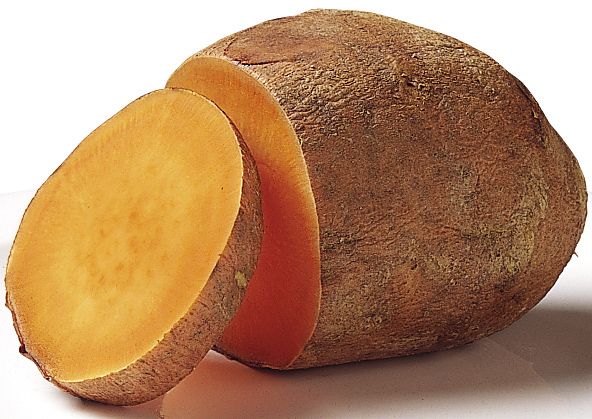
(Image via Wikimedia Commons)
Ready for the finale? My most exciting discovery in my choline research is that chocolate is a great source of choline. (Which means, all those times when I was craving chocolate, it wasn’t just me, it was also my neurotransmitters.) I could list about 100 chocolatey snacks here, but I’m going to have some self-restraint and just do one.
Chocolate éclair (79 mg)
This one takes me way back to when I was too short to even see over a bakery counter. (Thanks, Mom, for getting me addicted to these at such a young age.) When I discovered this dessert, I considered changing my name to Claire, just so I could be “Chocolatey Claire.” Is an éclair the same as a doughnut? Of course not, silly! It’s far, far better. I recommend a tall glass of milk with this one.

(Image via Wikimedia Commons. Credit: georgie_grd)
If you want to try making some éclairs from scratch, here’s a yummy recipe over at Moo’s Pantry.
That’s all I’ve got for today. What high-choline treats would you add to this list?
Related articles
- Omelet you in on these yummy high-choline recipes (thetickthatbitme.com)
- Eat Your Eggs, Benedict! (thetickthatbitme.com)
- My Weakness Jif Peanut Butter! (beatcancer2010.wordpress.com)
Omelet you in on these yummy high-choline recipes 04/29/2012
Posted by thetickthatbitme in Choline Diet, Whole Person.Tags: breakfast, choline, diet, Food, leftovers, mushroom, omelet, recipe, Smoked salmon, Spinach
2 comments
In my family, omelets are somewhat of a sacred tradition. My dad was the omelet-master when I was growing up, and whenever we had weekend company, he’d make each guest and family member his or her own made-to-order omelet. By the time I was in high school, I’d picked up his technique and was making omelets for all my friends after school. Little did I know back then what a great source of the B vitamin choline omelets can be! (For more on choline, see the Choline Diet page.)The best thing about omelets besides the choline factor is the infinite possibilities–there are no rules about what cannot go in an omelet. Here are some of my favorites.
Smoked Salmon, Spinach, and Avocado Omelet
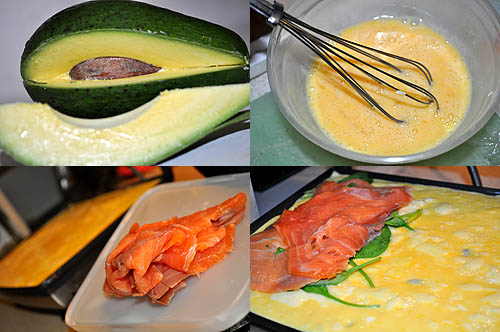
Image via cuisineaustralia.com.
I love smoked salmon, and I’m always looking for new ways to cook with it (aside from just eating it on a bagel with cream cheese–yum). Check out this salmon omelet recipe from cuisineaustralia.com.
Choline Count: eggs (2) 200 mg + salmon (3 oz) 80 mg + spinach (2 oz) 11 mg + avocado (1) 19 mg = 300 mg of choline!
Mushroom, Spinach, and Feta Omelet
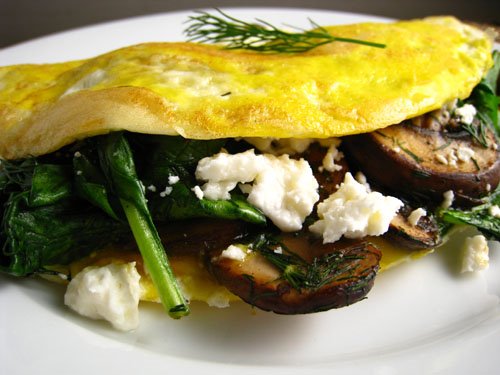
Image via closetcooking.com
What do I like almost as much as smoked salmon? Crumbly cheeses! Feta and spinach are always delicious together, why not put them in an omelet? Add shiitake mushrooms for a bonus 66 mg of choline! Check out this recipe on closetcooking.com.
http://www.closetcooking.com/2008/03/mushroom-spinach-and-feta-omelet.html
Choline count: eggs (3) 300 mg + shiitake mushrooms (4 oz) 66 mg + spinach (2 oz) 11 mg + feta cheese (1 oz) 4 mg = 381 mg choline!
Leftover Stir-fry Omelet
This was my go-to omelet when I was a college student and rarely went grocery shopping or planned meals. I always seemed to have leftover Chinese food in my fridge, so I devised this omelet to make leftovers into breakfast. I usually use two eggs per person with a little milk. If you’ve got the jumbo eggs, you can get away with using one and use a little more milk (1 oz of skim milk has 5 mg of choline!). I whisk up the eggs and the milk in a bowl, then pour them into my omelet pan (yes, they make a size of frying pan that’s just for omelets). Meanwhile, I heat up the leftover stir-fry in a separate pan. Once that’s heated through and the egg mixture has set in the pan, I spoon some stir-fry onto one side. After a few minutes, the other side will be ready to fold over.

Image via mccormick.com
If you want to make a healthy stir-fry at home to use for your leftovers, you can try this recipe for Orange Ginger Beef Stir-fry from mccormick.com.
Choline count: eggs (2) 200 mg + beef sirloin (1/4 lb) 96 mg + broccoli (1/2 cup) 31 mg = 327 mg choline!
Hope you enjoyed this week’s high-choline recipes. Eggspect (sorry, I promise I’ll try to stop) to see more next Sunday!
Have a high-choline recipe (and mouth-watering photos) you’d like to showcase on this blog? E-mail thetickthatbitme AT gmail DOT com.
Related articles
Eat Your Eggs, Benedict! 04/22/2012
Posted by thetickthatbitme in Choline Diet, Whole Person.Tags: Anaplasmosis, benedict, Borrelia burgdorferi, Borrelia hermsii, choline, diet, eggs, HBO, inflammation, Lyme, mushroom, recipe, salmon
5 comments
If you know my story, you know that when I was diagnosed with B. hermsii and Anaplasmosis, my doctor put me on a high-choline diet. Why choline, you ask? Choline is a B vitamin that aids in the transmission of nerve impulses from the brain through the central nervous system–this process is essential to functions like memory and muscle control. Since Borrelia like to attack the central nervous system, choline is especially important for people with (past and present) B. hermsii and B. burgdorferi infections. People who eat diets high in choline have also been shown to have lower levels of inflammation (like inflammation of the joints in Arthritis) than people who don’t. You can read more about choline here.
Enter the Benedict. It is by far my favorite egg-based dish, and I enjoy making it at home just as much as I do eating it for brunch in a fancy restaurant.

"Eggs" Benedict Talley (Mehcad Brooks) from HBO's True Blood. Photo via hbo.com.
One large poached egg has 100 mg of choline, so if you eat two, you get about half of your recommended daily amount (425 mg for women, 550 mg for men). Add to that other high-choline foods like smoked salmon (129 mg), Canadian bacon (39 mg), portabella mushrooms (39 mg), spinach (35 mg), asparagus (23 mg), avocado (21 mg), and tomato (6 mg) to get your choline fix!
Here are my top five Benedicts:
1. Old Fashioned but Fried
for those mornings (or afternoons, or evenings!) when I’m feeling traditional, yet lazy
I learned this simple recipe from my mother, and it
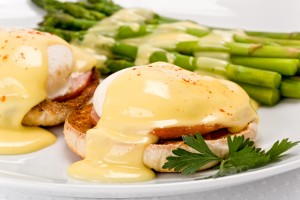
Image via firsttimerscookbook.com
brings back all kinds of fond childhood memories. A toasted whole-wheat English muffin, topped with pan-fried Canadian bacon and over-easy eggs (make sure they’re still a little runny, because that’s the best part). The hollandaise sauce I usually make with one of those sauce packets you can find in the grocery store (next to the gravy packets). It’s easy–you only need to add milk and butter–and, in my opinion, it tastes better than the from-scratch hollandaise recipes I’ve tried. Because of the butter and bacon, this is a slightly fattening meal, so I balance it with a side of boiled asparagus, which tastes delicious with the hollandaise sauce and adds 23 mg of choline to this meal!
Choline count: eggs 200 mg + Canadian bacon 39 mg + asparagus 23 mg = 262 mg of choline
2. Crab Benedict
for when I’m feeling crabby or rooting for the Terps
I’ve never made this one at home, but I’ve had it at Toasties Cafe, and it is delicious!
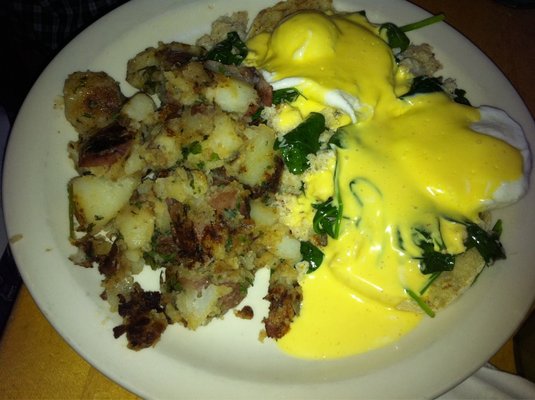
Image via Yelp.com.
Choline count: eggs 200 mg
3. Portabello Mushroom Benedict
for the fungus-lovers amongus
If you’re looking for a meatless meal or just craving these yummy mushrooms, this is the Benedict for you. Check out Jackie Dodd’s recipe at TastyKitchen.com, which also includes spinach, tomatoes, and Sriracha for a kick!

Image via TastyKitchen.com
Choline count: eggs 200 mg + portabello mushrooms 39 mg + spinach 35 mg = 274 mg of choline
4. Tomato Avocado Benedict
because I’m a California girl
My mouth was watering as I scrolled through SoupBelly.com’s deliciously illustrated recipe for this west-coast Benedict. If you want to make it even more California, use sourdough English muffins.

Image via soupbelly.com.
Choline count: eggs 200 mg + avocado 21 mg + tomato 6 mg = 227 mg of choline
5. Eggs Hemingway
for when I’m feeling literary
This one may seem a bit fishy, but I assure you it’s delicious and packed with choline. It’s also called Norwegian Benedict. Here’s a recipe at food.com that includes not only salmon but spinach, too!
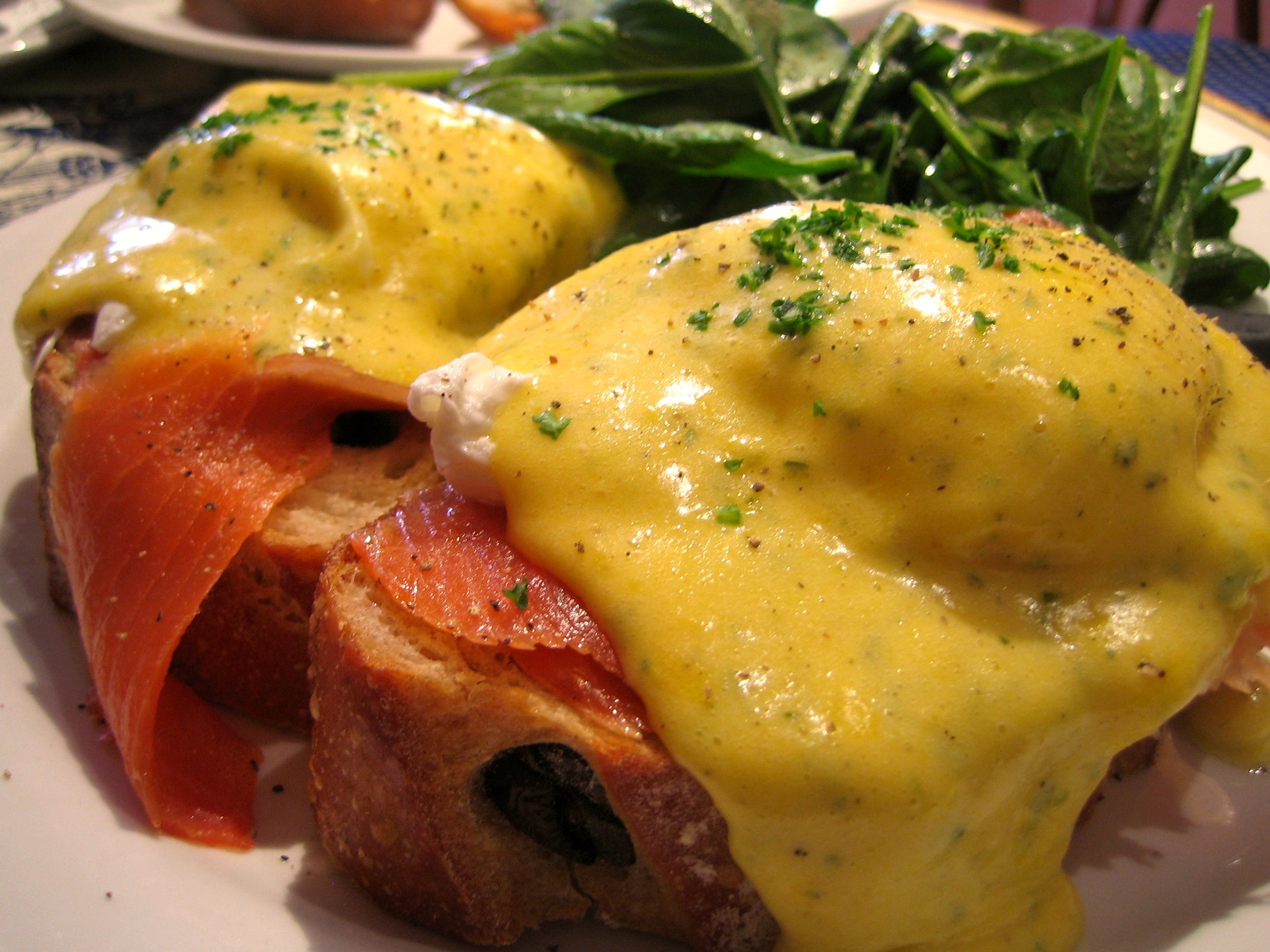
Image via Wikipedia.
Choline count: eggs 200 mg + smoked salmon 129 mg + spinach 35 mg = 364 mg of choline
Now that I’ve made myself really hungry, I’m going to go make my own Benedict. Hope you enjoy these eggcellent (sorry, I couldn’t resist) high-choline meals!
 THE TICK THAT BIT ME