Stuff I’ve been tested for and WHY 05/08/2012
Posted by thetickthatbitme in Diagnosis, TBI Facts, Whole Person.Tags: Anaplasma phagocytophilum, Babesia, Bartonella, Borrelia, Ehrlichia, food poisoning, health, labs, Lyme Disease, medicine, pets, Quest Diagnostics, ticks
add a comment
I apologize for the inconsistent posting lately; it’s been a busy couple weeks. No tick-lit today, so I’ll owe you some later in the week!
Tonight’s question: How did my doctor find 3 crazy infections that five other doctors missed? (One of which went undiagnosed for 7 years!)

This is the small binder I carry with me to doctor’s appointments. I have about half a file drawer dedicated to the rest.
Answer: He sent me to get tested for a whole lot of stuff.
How did he know what to order? He considered my risk factors and exposure to disease vectors (like ticks and pets). Is it important for your doctor to know if you’ve been out of the country? If you used to live in another state? If you have pets? If you hike or camp? If you’ve had food poisoning? Yes, yes, yes, yes, and yes!
Below, rather than listing the name of each disease/infection I was tested for, I’ve listed the names of the tests as they appear in my lab reports from Quest Diagnostics. (No, Quest did not pay me to mention their name. I just happen to like them, since they’re always nice to me and their tests helped find my infections.) They’re sorted according to why my doctor thought to order them.

Quest sends me pretty labs in color (as if that matters). Tip: always check the box on your lab slip that says “mail patient a copy” or something like that.
DISCLAIMER: Just because I’ve been tested for something doesn’t mean that you need to be. Only you and your doctor can decide what you should be tested for based on your history, risk factors, and symptoms.
Tick exposure
Borrelia hermsii AB IFA
Ehrlichia chaffeensis IFA
Lyme Disease Antibody (IgG/IgM) Western Blot
WA1 (Babesia duncani) IgG Antibody, IFA
Babesia microti Antibody IgG/IgM
Cat exposure
Bartonella Species Antibody test w/reflex (FYI: One of my cats has tested positive for Bartonella, but I was negative. He’s never scratched or bitten me, but I have been bitten by a different cat.)
Toxoplasma IgG Antibody
Toxocara Antibody, ELISA (serum)
Having food poisoning in Mexico and China
Entamoeba histolytica IgG, ELISA
Giardia lamblia AB Panel, IFA
Helicobacter pylori breath test
Salmonella and Shigella Culture (this was not fun, but I’m glad they were negative)
Camphylobacter Culture
Additional tests:
Immunoblobulins G, A, and M (to see if I was deficient, as this would affect the results of antibody tests and would mean I might need additional treatment, like IVIG—luckily I was not deficient)
CBC (to see if I was low on any particular kinds of blood cells, which might indicate an infection)
Questions? Feel free to comment/e-mail. For whatever reason, I seem to enjoy discussing labs.
Eight things you need to know about Anaplasmosis 04/25/2012
Posted by thetickthatbitme in Diagnosis, TBI Facts.Tags: Anaplasma phagocytophilum, Anaplasmosis, Borrelia burgdorferi, doxycycline, health, labs, Lyme Disease, medicine, Rocky Mountain Spotted Fever, tick, treatment
5 comments
A new fact sheet is up today for Anaplasmosis, otherwise known as Anaplasma phagocytophilum infection. Try saying that three times fast. This is one of the two TBIDs I’ve been unlucky enough to have, but I had never heard of it before my lab results came back with a positive antibody test for it. By the end of this post, you’ll know eight things you didn’t know before about Anaplasmosis.
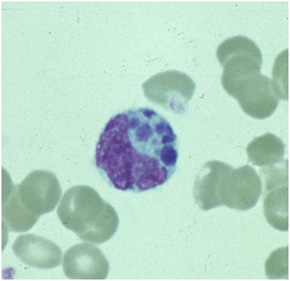
A microcolony of A. phagocytophylum visible in a granulocyte (white blood cell) on a peripheral blood smear. Image via CDC.gov.
1. Anaplasmosis is spread by the same ticks that spread Borrelia burgdorferi (Lyme Disease). This means that people with Lyme can have a coinfection with Anaplasmosis (and some of them don’t know it).
2. The symptoms of an Anaplasma phagocytophilum infection are: fever, headache, muscle pain, malaise, chills, nausea / abdominal pain, cough, and confusion. Some people get all the symptoms; other people only get a few.
3. If you show symptoms of Anaplasmosis, your doctor shouldn’t wait for lab results to come back to begin treating you. The CDC recommends beginning treatment right away.
4. If you’ve been infected with Anaplasma phagocytophilum and you get tested within the first 7-10 days you are sick, the test might come back negative. This doesn’t mean you don’t have Anaplasmosis, and you’ll need to be tested again later.
5. The best way to treat Anaplasmosis is with the antibiotic Doxycycline. According to the CDC, other antibiotics should not be substituted because they increase the risk of fatality. If your doctor insists on treating your Anaplasmosis with something other than Doxycycline, it’s probably time to get a new doctor. For people with severe allergies to Doxycycline or for women who are pregnant, the drug Rifampin can be used to treat Anaplasmosis.
6. Anaplasmosis can be confused with other TBIDs in the rickettsia family like Rocky Mountain Spotted Fever (RMSF) and ehrlichiosis. These infections are also commonly treated with Doxycycline.

Image via CDC.gov.
7. The number of cases of Anaplasmosis reported to the CDC has increased steadily since 1996. You can attribute this to climate change or not, but the trend suggests that this disease will be an increasingly more common problem in the future.
8. More than half of Anaplasmosis cases are reported in the spring and summer months. This is a no-brainer, since this is when tick populations thrive. To avoid infection, take steps to avoid tick exposure for both you and your pets.

Image via CDC.gov.
 THE TICK THAT BIT ME